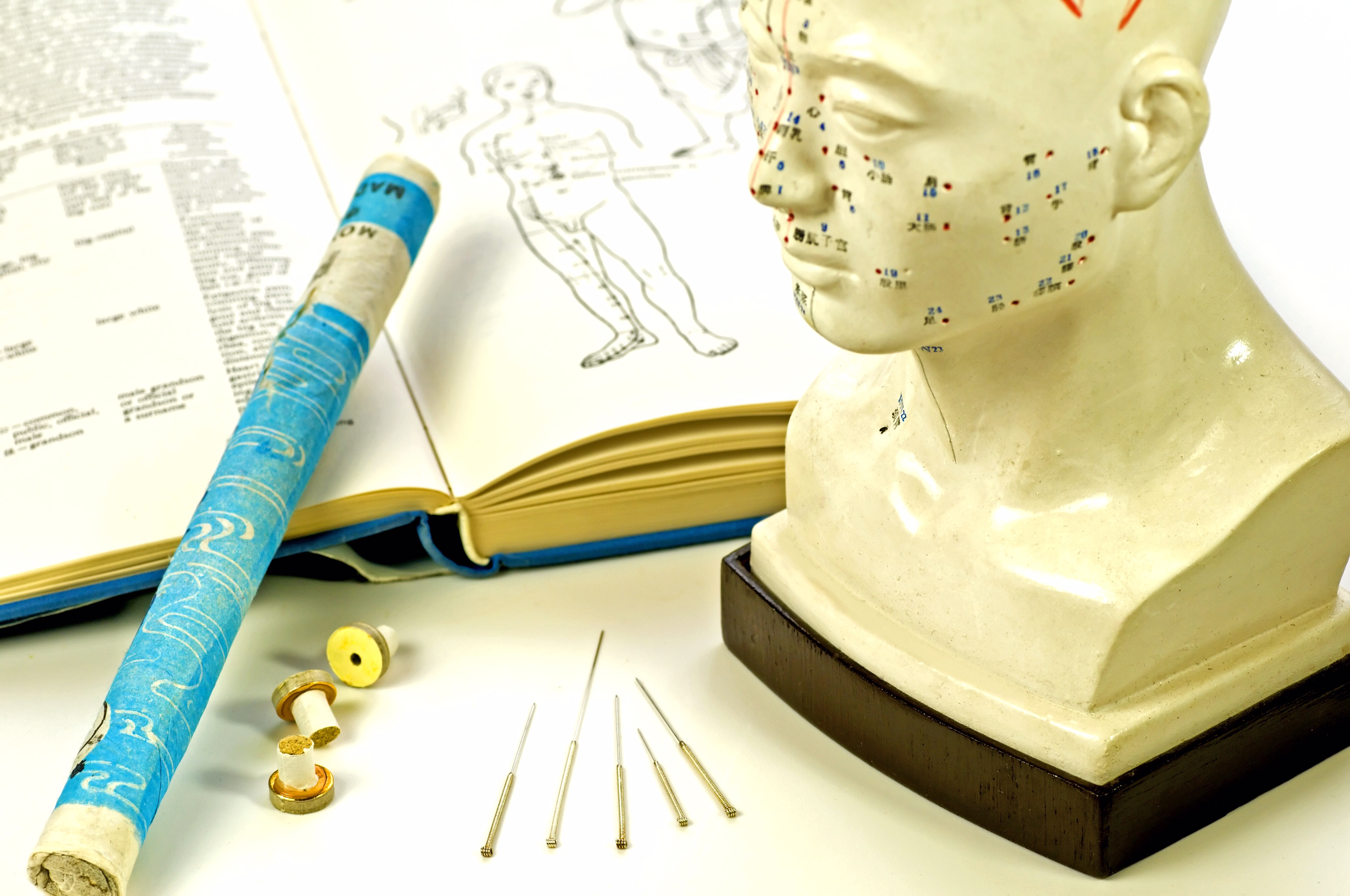
 Traditional Chinese Medicine is an ancient and distinct system that views the body as an interconnected whole, with all the parts working and influencing one other. It also takes into account the mental and emotional states, and is able to relate them to physical symptoms and organ systems. For example, Chinese Medicine is able to explain why grief can make you constipated. Or why diminished hearing can be linked to a decrease in libido. Practitioners of Chinese Medicine are able to see the complex intricate links between body systems, and will work towards bringing these systems back into a place of balance and efficiency. This re-balancing is most often achieved through herbs, lifestyle and dietary changes, as well as acupuncture.
Acupuncture rebalances the flow of Qi, or life-force, in the channels that this energy flows throughout the body, called meridians. This rebalancing is achieved through the careful insertion of thin, sterile needles into influential points along these meridians.
*Interesting tidbit: in the 1950’s, after the Chinese Revolution, there was a big push to let go of old traditional style of medicine and instead adopt the emerging Western method. Before making such drastic moves, the government ran a series of experiments which compared Traditional to Western medical methodology. They found that Traditional medicine performed just as well, if not better in some instances, than Western medicine. It was decided that both systems would be incorporated together into the culture.
 Scarborough Naturopathic Clinic